Symptoms and background
Dry eyes (keratoconjunctivitis sicca) are among the most common eye conditions. In Switzerland, an estimated 10 to 20% of the population is affected – and the trend is rising, not least because of increasing screen work.
Typical symptoms are burning, itching, a gritty sensation, redness, fluctuating vision and sensitivity to light. Paradoxically, dry eyes can also water heavily as a reaction to the irritation.
Watery eyes (epiphora) have various causes: narrowed or blocked tear ducts, inflammation, an overproduction of tears, ingrown eyelashes or dry eyes.
What modern medicine can do
Dry eyes respond well to treatment – the key is an accurate diagnosis of the cause. We distinguish between the aqueous-deficient form (too little fluid) and the evaporative form (a disturbed lipid layer in the tear film).
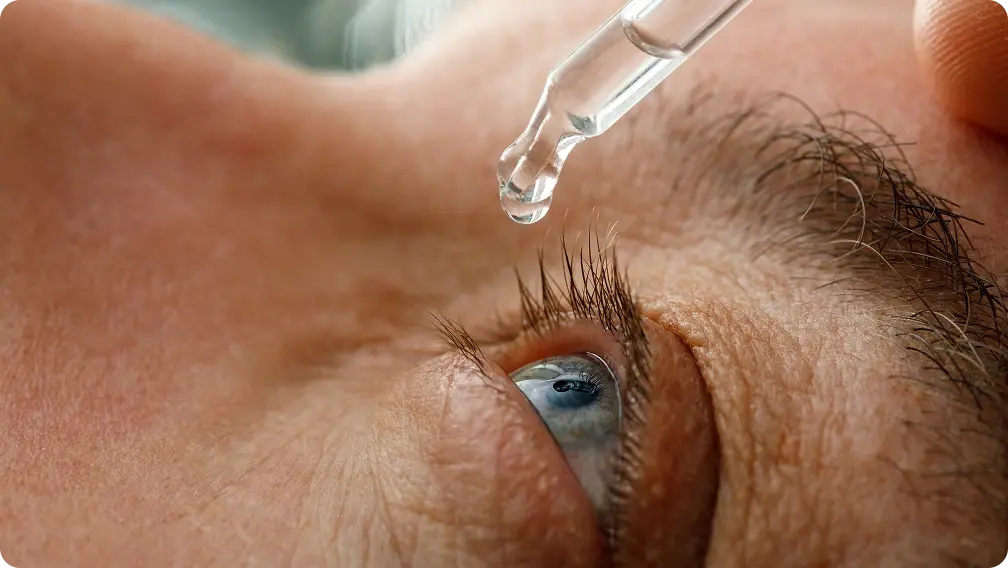
Treatment options include artificial tears (drops or gels), lid margin hygiene, punctal plugs (closure of the tear ducts), omega-3 supplements and IPL therapy (intense pulsed light) for meibomian gland dysfunction.
We treat narrowed or blocked tear ducts with irrigation, probing or – in cases of permanent narrowing – a small surgical procedure.
Strengths of Argus Augenklinik
Diagnosing causes instead of fighting symptoms
Tear film analysis, slit lamp examination and assessment of meibomian gland function
Punctal plug treatment
A gentle procedure to temporarily block the drainage of the tear film
Assessment and treatment of the tear ducts
From irrigation to a small surgical procedure depending on the findings
Holistic advice
Taking nutrition, screen work and environmental influences into account
Treatment process
-
Medical history & tear film diagnostics
We discuss your symptoms and record possible contributing factors such as your daily routine, screen work and medication. We also examine the tear film using the Schirmer test, TBUT and an assessment of the meibomian glands. -
dentifying the cause
We distinguish between tear deficiency, evaporation disorders and other triggers such as misaligned eyelashes or tear duct problems. -
Therapy
Depending on the findings, we combine drops, ointments, lid margin care, punctal plugs, IPL or tear duct irrigation. -
Monitoring & adjustment
We support you in the long term and adjust the treatment regularly – particularly in the case of chronic symptoms.

Frequently asked questions
Do over-the-counter eye drops help?
In the short term, yes. For a lasting solution, it is important to treat the cause. For long-term use, we recommend preservative-free drops.
Does health insurance cover the treatment?
Yes, the treatment is covered by health insurance.
Are blocked tear ducts dangerous?
Not life-threatening, but uncomfortable and prone to inflammation. A simple irrigation or a minor operation can provide lasting relief.
Why do I have dry eyes even though they water constantly?
Paradoxical, but common: when the eye is dry, it produces more reflex tears. These do not have the right composition, however, and therefore only relieve the symptoms briefly – the cause remains.